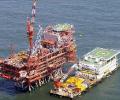
Reliance Industries Ltd (RIL), the operator of the KG-D6 gas block, has told the government it cannot comply with its latest directive on prioritising gas supply.

New players in the organised branded garment retail industry such as Koutons and Cantabil along with a host of other brands are going through a tough time, thanks to the rapid expansion via debt and their deep discounting model.
It plans to invest Rs. 10,000 crore to set up a power generation capacity of 2,500 Mw near Pune.

With RIL's KG-D6 output playing truant, steps need to be taken to stabilise the country's natural gas production.

Former managing director of McKinsey & Co, Rajat Gupta, has stepped down as chairperson of the Public Health Foundation of India (PHFI). Gupta's resignation comes days before the PHFI executive was to discuss his exit.
An expert committee headed by Planning Commission member Narendra Jadhav is giving finishing touches to the proposals.

The government will reserve the right to decide on the cost recoverability of royalty from Cairn India's block in Barmer while clearing Cairn Energy's sale of its Indian subsidiary to Vedanta Resources.
Pilots working for Air India are divided on the call of a nationwide strike from March 9 by the Indian Commercial Pilots Association (ICPA), part of the erstwhile Indian Airlines, which has 680 members.
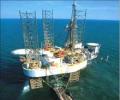
There was a time when gas was offered to India at a cheaper price but we could not close those deals.
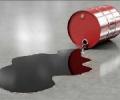
After prospects of a higher subsidy outgo on food and fertilisers, the government is faced with the spectre of a higher petroleum subsidy. Rising crude oil prices and its inability to increase fuel prices is all set to spoil the government's subsidy calculations. The country meets 80 per cent of its crude oil demand through imports.
The company is also looking to expand the supply of gas by roads and is evaluating creation of small storage hubs along the highways.
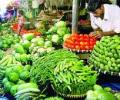
Main difference has been on including people above the poverty line in the Food Security Bill.
The Union Budget for 2011-12 is likely to be a low-key affair for social sector spending, as the government is unlikely to come up with any big-ticket announcement for the sector in the next financial year.
Indian companies with exposure to Egypt are keeping their fingers crossed as the Arab Republic is faced with a massive unrest.
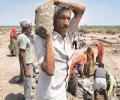
The government's bill for funding the National Rural Employment Guarantee Scheme (NREGS) has risen steeply, due to its decision to revise wage rates under these projects and to link these to the inflation rate.
A series of rises in petrol price following its decontrol on June 25 last year has increased the state governments' earnings from value added tax on petrol by around 21 per cent.

Reliance Industries Ltd (RIL) has opposed the proposal of a new pipeline from Kakinada to Srikakulam floated by Andhra Pradesh Gas Infrastructure Corporation (APGIC). RIL has argued that gas availability for the pipeline is uncertain and will not contribute to the development of a national gas grid.
Despite raising petrol prices by around Rs 2.95 a litre - the second-biggest increase in this calendar year so far - public and private retailers are losing Rs 50 crore a day on selling the auto fuel.

A labour ministry note sent to the rural development ministry (MoRD) says the minimum wage notified in each state - often higher than the NREGA set one - has to be paid. But MoRD has written to the PMO that the NREGA enactment has clauses that exempt it from all other laws, including the Minimum Wages Act. Hence, MoRD is not legally obliged to pay at any other rate.
Though ONGC and OIL are major producers of natural gas, they currently have no presence in its retailing and marketing, a field dominated by GAIL and its joint ventures.
 © 2026 Rediff.com - Advertise with us - Disclaimer - Privacy Policy - Sitemap - Feedback - About us - Terms of use - Grievances